
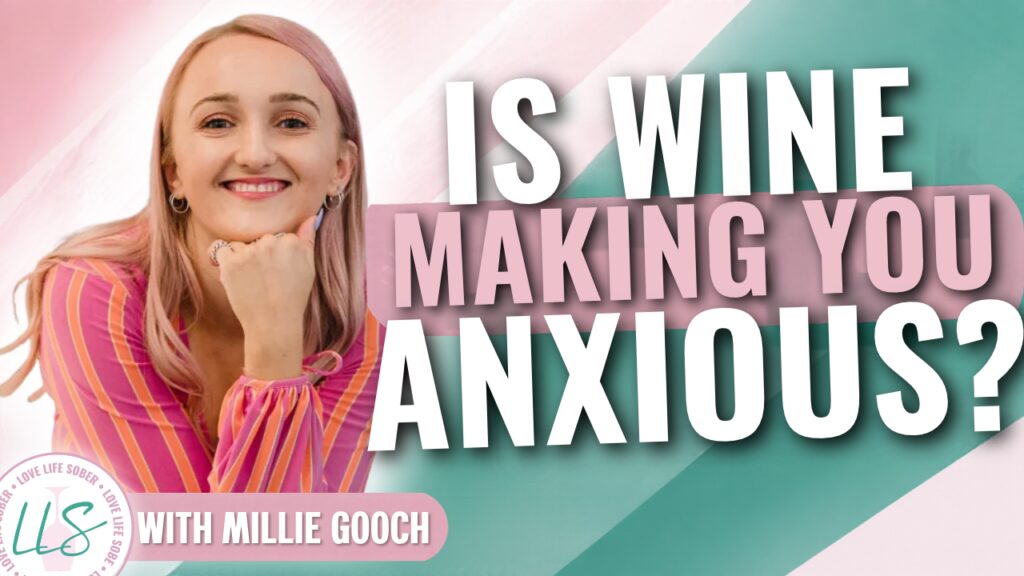
Have you ever poured a glass of wine to calm your nerves, only to wake up the next morning with your heart racing, replaying every word you said the night before?
You’re not imagining it, and you’re not alone. There’s a name for that feeling: hangxiety. And in this week’s episode of the Love Life Sober Podcast, I sat down with the woman who wrote the book on it.
Millie Gooch is the founder of Sober Girl Society and the author of The Sober Girl Society Handbook, Boozeless, and her brand-new book, Hangxiety. Millie started the sober conversation for so many women in the UK back in 2018, and I’ve followed her work since the very beginning of my own alcohol-free journey. With a master’s degree in mental health and addiction and a real gift for making brain science easy to understand, she is the perfect person to explain what alcohol is really doing to our mental health.
📺 Watch here:
Millie’s Story: Drinking to Feel Better, Then Feeling Worse
For Millie, the biggest cost of drinking wasn’t physical. It was mental. She struggled with blackouts and would wake up asking, “Where am I? What happened? What did I say?” Even on nights she remembered, the next day brought crushing anxiety, paranoia, and shame.
That anxiety would slide into days of feeling worthless, beating herself up for not being able to “handle” alcohol the way she thought everyone else could. Then the weekend would come, and she’d think, I know what will cheer me up. So she’d drink again.
“I was just in this cycle of drinking to feel better about myself and then feeling worse about myself,” she shared. Add in the money, the strained friendships, and the way drinking had become part of her identity, and the result was a constant state of anxiety and depression.
Today, Millie says the occasional drinking dream is actually a gift. She wakes up and thinks, “Thank God that will never be me again.”
What Is Hangxiety, Really?
A quick note before we dive in: this episode is for education and encouragement, not medical advice. If you’re struggling with your mental health, please reach out to your doctor or a qualified professional.
Millie explains hangxiety simply: it’s a neural rebound. Your brain loves balance. When you drink, alcohol boosts GABA, the calming neurotransmitter, and suppresses glutamate, the “go, go, go” one. That’s why you feel so relaxed.
But as the alcohol wears off, your brain scrambles to restore balance. It turns GABA down and glutamate up, and suddenly you’re jittery, overthinking, and anxious. As Millie puts it, alcohol is like a frisbee: “You throw it into the distance, and then it comes back and whacks you in the face the next day.”
She also clears up a common myth. Alcohol is called a depressant not because it causes depression (though it can certainly affect your mood). It’s because it depresses your central nervous system, slowing communication between your neurons.
The Truth About Blackouts
One of the most eye-opening parts of our conversation was about blackouts. Alcohol interferes with the part of your brain that moves memories from short-term to long-term storage. When that process is interrupted, the memories are never stored at all.
So all those mornings spent racking your brain to remember? Those memories often aren’t there to find. Even scarier, during a blackout you can be talking, dancing, and seeming completely normal, with no memory of any of it the next day.
Drinking to Sleep and Drinking to De-Stress
Alcohol does help you fall asleep. Millie doesn’t deny that. But it disrupts your 90-minute sleep cycles, which means even eight hours in bed may not give you truly restorative sleep. You wake up tired, wired, and emotionally reactive, and the cycle starts again.
The same pattern shows up with stress. Alcohol gives you instant relief up front, but behind the scenes it can raise cortisol and stimulate your stress systems. Over time, your body adapts, leaving you more stressed and anxious even when you’re not drinking. Millie’s verdict? “It’s just rubbish. It doesn’t actually work for what you want it to work for.”
Mental Health Washing and the Comparison Trap
We also talked about “mental health washing,” when alcohol brands raise money for mental health charities without ever acknowledging their product’s role in the problem. Millie compares it to a sunbed company fundraising for cancer research.
And we talked about the comparison game: “How much were you drinking?” Millie spent years watching her friends and assuming she must be doing something wrong. But measuring your drinking against someone else’s keeps you stuck. The better question is what alcohol is doing to you, whether that shows up in your mental health, your finances, your energy, or your relationships.
Finally, Millie shares what she’s learning about ADHD and alcohol, including how many perimenopausal women are drinking to cope with new diagnoses, and why finding better coping tools matters so much.
What You’ll Learn in This Episode
- What hangxiety is and what’s happening in your brain when you wake up anxious after drinking
- Why alcohol is called a depressant, and why it’s not for the reason most people think
- What really happens during a blackout, and why those memories were never stored
- Why alcohol helps you fall asleep but steals the restorative sleep your mental health depends on
- The stress paradox: how drinking to relax can raise your stress levels over time
- What “mental health washing” is and why it adds to the confusion about alcohol
- Why comparing your drinking to anyone else’s keeps you stuck
- How alcohol can make ADHD symptoms worse, especially for women in perimenopause
If You’ve Ever Thought…
- “A glass of wine is the only thing that helps me unwind after a stressful day.”
- “Why do I wake up so anxious after just a few drinks?”
- “I can’t fall asleep without a drink.”
…this episode is for you.
Get Millie’s Book
Connect with Millie on Instagram at @milliegooch and @sobergirlsociety.
Ready to Explore Life Without Alcohol?
If this conversation stirred something in you, you don’t have to figure it out alone. Join us for the Dry January 40-Day Fast, starting January 4, 2027, where we’ll walk through the Love Life Sober book together, one day at a time, with daily video lessons, coaching calls, and a whole community cheering you on.
Or come find your people inside the Love Life Sober Community, a grace-filled, shame-free space for Christian women rethinking their relationship with alcohol: https://lovelifesober.co.uk/community


